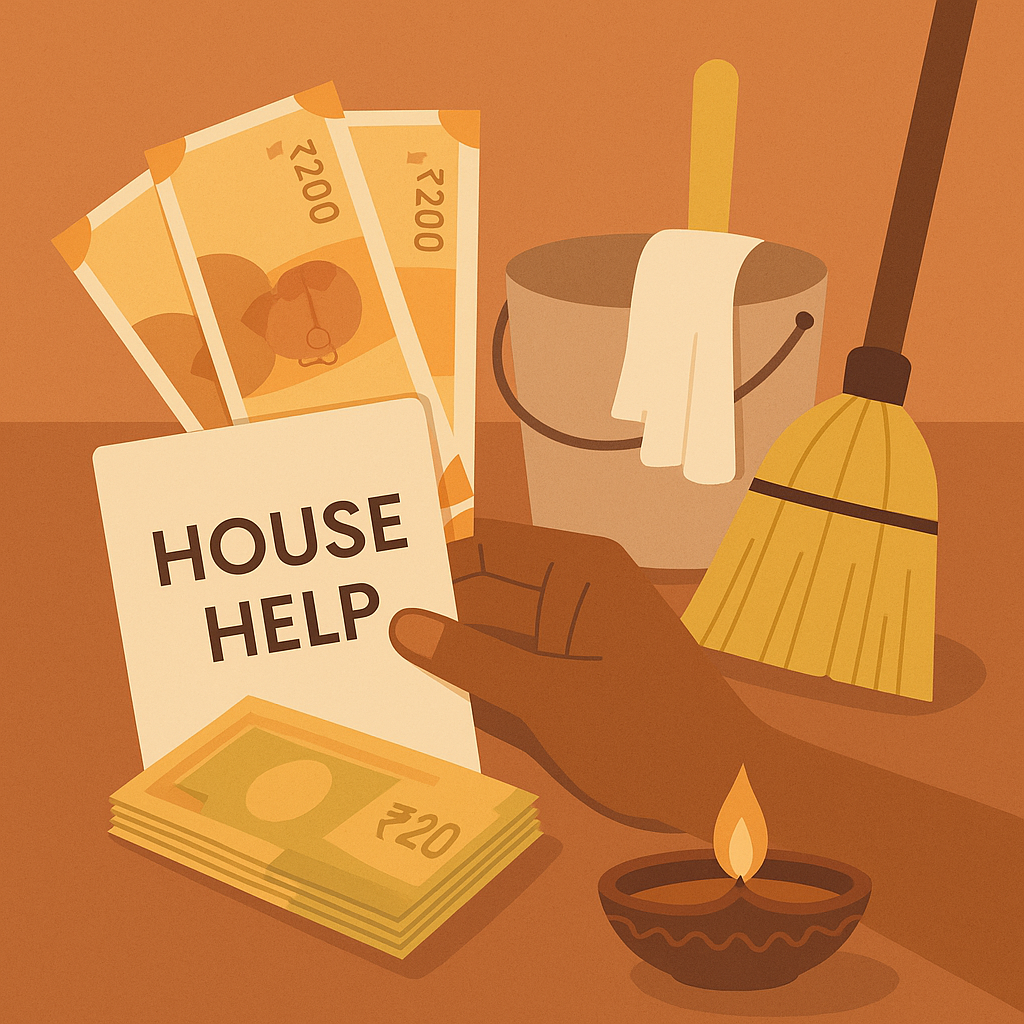
Why Diwali Cleaning Becomes So Complicated in a Shared Flat
Mornings in a shared flat can often seem like the beginning of a balancing act. Picture this: the doorbell rings, and there’s your maid, smiling as she gets ready for her daily routine. One flatmate casually says, “Didi, Diwali cleaning bhi kar lenge na?” It’s a simple question but sets off a chain reaction—first in the maid’s thoughtful nod, and then in the WhatsApp group chaos when someone shares the extra amount.
Diwali in a shared flat brings an energy that’s both exciting and overwhelming. Suddenly, everyone’s talking about deep cleaning, a few getting extra enthusiastic while others mumble about costs under their breath. There's always one person who's keen to coordinate—the self-appointed CFO of cleanliness—while another skillfully opts out, claiming a client call or sudden weekend plans.
And then there’s the awkward chat about money. Fairness stands awkwardly beside guilt, as flatmates debate how much extra to pay for the cleaning. The maid might wonder, “Kya sahab ne zyada diya ya Kam kisi ko?” Meanwhile, you’re commuting to Cyberhub calculating UPI transfers—realising that ‘I’ll send later’ is the flatmate anthem.
The Unsaid Power Dynamics
Hidden beneath this playful banter about who’s paying the extra 500 rupees is a real tension. It’s too easy to treat this deep cleaning as a given—an understood entitlement of the festival season. Yet, the truth is, it demands additional effort from your house help, who deserves respect and a fair fee.
In the end, it’s not just about a sparkling home. It’s about the dynamics in your shared flat. How you navigate this dance each Diwali speaks volumes about fairness and empathy—whether in dealing with your roommates or acknowledging the hard work of those who help keep your home running smoothly.
What ‘Festival Cleaning’ Actually Includes in a Shared Household
When you hear “festival cleaning,” it’s not just about moving the sofa and trying to vacuum out that one perpetually dusty corner. Diwali demands a bit more. It's about going beyond the routine and diving into the nooks and crannies of your shared space. Think of it this way: regular cleaning is like your everyday chai, while Diwali cleaning is the full thali—with all the extras.
The Deep Clean Difference
This time of year, cleaning extends to fans, windows, and those often-neglected balconies. Kitchen cabinets? Yep, those too. And it’s not just about wiping them down, but *really* scrubbing them clean. Washrooms get an extra shine, and the fridge needs emptying and defrosting. Decluttering becomes a mantra, as old clothes and forgotten gadgets find their way out.
Extra Hours, Extra Hands
Your regular house help might not cover all this within their usual hours or at their usual pay. So, it’s important to clarify if they’re up for the extra work or if you need to bring in external services. This isn't just a courtesy—it's a chance to be upfront about expectations and costs. Hiring professional deep cleaning services is common in Gurgaon and Bangalore, and while it can lighten the load, it also means divvying up extra expenses among flatmates.
Managing the Chaos
All this means added hours and sometimes extra days of work for the maid. That’s where good communication comes in. Start with something like:
“Hey [name], Diwali cleaning is around the corner. We’re planning to tackle fans, windows, and more. Can we discuss the extra help and the payment for it?”
Understanding the full scope of Diwali cleaning paints a clearer picture, helping to manage who does what and at what cost. With a bit of planning, you can dodge the post-Diwali showdown and ensure the festive spirit remains intact.
Understanding House Help Expectations: Extra Work & Diwali Bonuses
As the maid stands at your door with that familiar smile, someone’s bound to casually ask, “Didi, Diwali cleaning bhi kar lenge na?” And just like that, the wheels are set in motion. In many Gurgaon and Bangalore homes, this season means juggling expectations on both ends. You want a sparkling house, but there’s also that nagging question: how much extra is fair?
Diwali prep isn't just about throwing in a couple of extra jhaadu sessions. Maids often expect a festival bonus—a little extra that acknowledges their hard work and the fact that you’re probably hosting a crowd. Depending on your area, this can range from ₹500 to ₹1,500. Beyond that, any ‘deep cleaning’ work typically needs another layer of compensation.
In places like DLF Phase 3, it’s common for building groups to chat about how this flat gave a bit extra and that flat did not. And the maids chat too. They know who is fair and who might skimp. It matters because underpaying, intentionally or inadvertently, can lead to subtle long-term tension. One day it’s the Diwali bonus, the next it’s a sudden ‘family holiday’ for a week.
Remember, respect has to be a two-way street. Your maid might handle your jhaadu-pocha effortlessly, but her time—and energy—isn’t unlimited. She has other clients who undoubtedly have their own festive demands. It’s worth considering an external cleaning service if the workload seems overwhelming. An extra couple of hands may just balance the scales, leaving everyone feeling respected and valued.
Here’s a quick text you might send to start the conversation in your flat:
“Guys, with Diwali coming, let’s plan our cleaning and bonuses. Didi mentioned deep cleaning would be extra—let’s discuss how we can split this fairly. 😊”
Step 1: Have the Money Talk Early (Before the Jhadu Comes Out)
The door swings open, and there she is—your maid, smiling with the anticipation of Diwali work and maybe an extra buck. Before anyone can casually toss out, "Didi, Diwali cleaning bhi kar lenge na?", it's best to huddle your flatmates for a quick chat. This talk isn't about starting a war; it's about smoothing things over before everyone's mopping and cleaning.
Start with a casual message in the group chat. Something like:
*"Hey guys, can we discuss Diwali cleaning plans soon? Need to figure out what we're asking didi/bhaiya to do and how we’re splitting it. Would love everyone’s thoughts.*"
Sure, it might feel a bit awkward, especially if everyone's on their way to Koramangala or stuck in a cab to Cyberhub. But having this talk early is far better than navigating a last-minute chaos that leaves someone feeling ripped off. You know the WhatsApp chaos when someone blurts out the extra amount post-cleaning? Avoid that scene by setting expectations together.
Discuss the scope. What’s fair work for the maid, and where do external services come in? Remember, “festival cleaning” isn’t a small task, and expecting it to be included without discussion isn’t cool. Think about what’s realistic for them and fair for all of you.
This might mean detailing exactly what areas need deep cleaning or discussing bonus expectations. Clarity is everything. You’ll soon see that this pre-emptive strike on potential drama is like insurance—a small effort now to prevent big blow-ups later.
Step 2: List All Potential Festival Expenses in Your Shared Home
When the flat buzzes with talks of Diwali cleaning, it often feels like it's just about dusting those nooks and getting rid of cobwebs. But the expenses pile up quicker than you think. Your shared household isn’t just splitting the cost of extra maid hours or a deep cleaning service. There’s more to consider: from the vibrant rangoli materials and bright diyas to the sparkling lights strung across your balcony.
Throw in shared costs like puja samagri and it starts to look like a mini balance sheet. Even if your flat is more about vibes than rituals, you'll find yourself reaching for those chips and mithai for a casual get-together. And let's not forget what to offer your maid—snacks, a sweet gesture, or even the traditional Diwali bonus. Every contribution matters.
Listing everything out changes the game. It’s no longer about dodging the cleaning costs. Instead, it frames the conversation around shared joy and collective effort. Here’s a simple way to bring it up on WhatsApp:
“Hey folks, let’s list out all our Diwali expenses so things stay fair. Rangoli stuff, extra cleaning, lights, snacks—you name it. Splits can wait, but a full list helps us plan better. Thoughts?”
By breaking down each component, you make it easier for everyone to see where the rupees are going. It's less about feeling squeezed and more about being transparent. This way, you don't get stuck contributing for both the Rangoli artist you didn't know you had and the lazy flatmate who "forgets" their share.
Step 3: Decide What’s Shared vs Personal
The living room has that rich aroma of freshly cleaned floors, but the WhatsApp group is buzzing with debates about costs—the age-old dilemma of what’s shared and what’s personal during Diwali preparations. It's common to see a divide when it comes to cleaning and expenses.
In a Gurgaon flat, you might find three bachelors sharing the costs for the hall, kitchen, and balconies without a fuss. But personal bedrooms? That's another story. The general rule is straightforward: communal spaces are a shared responsibility, bedrooms are up to each person. If one of you wants a pristine deep-cleaned bedroom, it’s fair to handle that cost yourself. Maybe you're the one who has to work night shifts and needs your space to be extra perfect; that's valid but personal.
Shared vs Personal Decor
Decorations can be another sticky area. Those stunning rangolis and fairy lights for the common areas? Everyone pitching in makes sense. But, if someone wants a miniature mandir or a diya collection for their personal Ganpati setup, that’s on their tab. It’s all about respect for each other’s spaces and preferences.
Consider the couple in a Koramangala 3BHK planning a small in-house puja. Their offers to include everyone in the aarti and prasad are lovely, but also personal. If someone’s keen on doing their own puja back at their hometown with family, they shouldn't have to contribute to a flat-based one.
Sample WhatsApp Text
Here's how you might broach it in the group:
"Hey guys, with Diwali coming, should we split costs for hall cleaning and decorations equally? Bedrooms and personal stuff can be individual, cool? 😊"
This clarity keeps stress and resentment at bay. When everyone knows what's shared and what's personal, it feels more like a harmonious home than a battlefield.
Step 4: Calculating a Fair Split for Extra Maid Work & Deep Cleaning
When it comes to splitting extra cleaning costs, every flat has its own rhythm—and some rhythms need a bit of fine-tuning. A straightforward approach many lean towards is the equal split. If everyone plans to be around during Diwali, this might just be the simplest way to go: divide the total cost by the number of flatmates. So if you're looking at, say, ₹3000 for extra cleaning, each flatmate chips in ₹1000. No fuss, no drama. But, let’s be real, life isn’t always that neat.
Enter the weighted split. Maybe you've got a couple of flatmates who’re packing their bags for a week at home during Diwali. They won’t be around, so it feels unfair to ask them to pay the same as those staying put. Here, those who’ll be around might pay 75% of their share while travelers pitch in 25%. In our ₹3000 scenario, if two out of four flatmates are traveling, the stayers might cover ₹1125 each, while travelers contribute ₹375 each.
Then there's the room-based split. Particularly handy if one room’s claimed the bigger slice of the flat’s pie. Common area cleaning costs can be split equally, while bedroom costs are divided by whoever occupies them. If your shared living area requires ₹1800 and two bedrooms cost ₹600 each, in a 3BHK shared by three people, the common cost might be ₹600 each, plus individual room costs borne by occupants.
How you break it down really depends on your flat’s vibe. You know, just like that time someone forgot to bring their wallet to Cyberhub—only here, a bit more planning ensures nobody's feeling shortchanged.
Step 5: Talking to Your Maid or Cleaning Staff Respectfully
When your maid knocks on your door with a familiar smile, the temptation to casually say, "Didi, Diwali cleaning bhi kar lenge na?" is strong. But what follows can either be an awkward conversation or an opportunity to set the right tone.
Start by acknowledging the extra effort this work involves. Instead of assuming she'll be available, check if she can actually do it and how many days it might take. You could say, “Didi, festival ka time hai. Aapko kitne din lagenge aur kya extra time milega?” This not only shows respect but also opens up a dialogue.
Discussing compensation directly avoids any later confusions. Too often, people say, “Dekh lenge” when talking about payment. Such vagueness can lead to misunderstandings. Be clear upfront: “Is baar, hum x amount denge extra is kaam ke liye. Theek hai?” It sets expectations and ensures both parties agree on the terms. For a bonus, it’s helpful to follow colonial norms—find out what’s usual in your building, and offer something similar or a bit more.
A Sample WhatsApp Text for Clarity with Your Maid
Hi Didi,
Next week Diwali cleaning karna hai. Aapka schedule kaise hai? Kitne din lagenge? Hum x amount extra denge, and y bonus bhi Diwali ke liye. Theek rahega?
Respecting her boundaries is key. If she declines certain tasks, consider external cleaning services for heavy-duty work. They’re often reliable and you can split the cost with your flatmates.
Remember, it’s not just about a clean house—how you handle this conversation impacts the relationship you have with a person who plays a significant role in your everyday life. A little empathy and clarity go a long way.
Step 6: Handling Different Income Levels & ‘Broke This Month’ Flatmates
At some point, ‘broke this month’ becomes the default excuse in every shared flat. You know the scene—a cup of chai in hand, someone’s casually mentioning how their savings are looking thin. While you can empathise, especially with rent and Swiggy bills looming, it can put a dampener on collective plans like Diwali cleaning.
When living with diverse income levels, open conversations are key. If someone’s genuinely strapped, maybe they contribute in ways that aren't strictly monetary. Can they organise the cleaning day or tackle the grocery run? It's a way to stay involved without stretching their bank balance.
For those earning a bit more, voluntarily covering extra costs can be a goodwill gesture. But this shouldn’t be assumed or done with gritted teeth. If the difference is minor, splitting payments into parts (half this month, half next) is another way to keep things fair. It’s amazing how breaking a ₹1500 expense into two bits suddenly makes it feel manageable.
Money Talk Sample
When tensions simmer, a simple WhatsApp text can douse the fire. Try:
"Hey guys, Diwali cleaning is coming up! Let's figure out how we can split the costs, especially if anyone's short this time. Maybe we can break it into two parts or cover different bits, like someone's extra for decor or cleaning?"
Remember, building resentment on either side—those who feel burdened and those who feel guilty—is not a festive vibe. Sharing responsibilities and being upfront early can keep the peace and allow everyone to enjoy a sparkling home without the hangover of hidden grudges.
Avoiding Common Fights: Travel Plans, Ghost Flatmates & Last-Minute Changes
The festival cleaning rollercoaster always starts with the same question: "Yaar, who's going home for Diwali?" There's always that one flatmate saving their annual leave to join a family reunion, insisting they shouldn’t pay for cleaning they “won’t even see.” And right there is the first potential spark of house-based drama.
The Ghost Flatmate Phenomenon
Some folks have mastered the art of flatmate invisibility—especially when there's work to be done. They advocate relentlessly for deep cleaning but manage to vanish when it's time to decide how everything's getting split. If you're dealing with one, try a WhatsApp nudge:
"Hey, everyone! Quick reminder about the Diwali cleaning costs. Let's figure out the amounts today, ya?"
Master Bedroom Dynamics
Living with a couple? Or maybe you're in a bigger room and someone else has the box room. Size matters—at least when it comes to festival expenses. A bigger space often means more area to clean, and more wear and tear. Acknowledge this. Maybe suggest a tiered payment plan that factors in room size (and emotional investment).
The Newbie Dilemma
Welcoming in a new flatmate right before Diwali? Fun. Figuring out what share they should pay? Not so fun. Remember, it’s about setting the tone for their stay. Maybe they give a reduced amount as a gesture—"Hey, we sorted XYZ costs for Diwali; think you'd be able to chip in a little bit for common spaces?"
The Reluctant Celebrant
There's the odd flatmate who just doesn’t vibe with Diwali rituals. They’re happy to stay out of it all but use the living room every day. For them, it’s about gently suggesting:
"We all use the shared spaces, so we should all pitch in for cleaning them. Makes sense?"
Finally, steer the house towards calm. Acknowledge that it’s not just about the money—it's about living well together. And maybe, just maybe, this could be the setup where everyone gets a fair shot at a stress-free Diwali.
Payment Logistics: How to Actually Settle Festival Expenses Smoothly
The maid’s just finished her cup of chai, smiling at the mention of extra Diwali cleaning. Meanwhile, your phone buzzes with messages from the flat group: “How much do you think is fair?” “Who’s paying her this year?” Before this spirals into a familiar debate, it’s time for some structure.
UPI Groups & Festival Pools
Setting up a UPI group can be a game-changer. You can all transfer a set amount for Diwali into a shared pool. This way, nobody ends up being the hero—the one floating cash while waiting for others to settle up.
Google Sheets & Expense Apps
Consider a simple Google Sheet to track who’s paid what. It’s open, transparent, and nobody can say they forgot. There are apps like Splitwise too, which do the math for you. Updating these can be as regular as your daily Swiggy order and almost as essential.
Say No to the ‘Responsible’ Flatmate Trap
There’s always one flatmate, the go-to for organizing bills, remembering birthdays, and yes, settling house expenses. But letting them handle it all means they end up managing everyone's outstanding amounts. It's fairer, and definitely less stressful, when the load is evenly distributed.
Keeping It Fair
Platforms like talo focus on making shared finances as smooth as possible. It’s the ethos of structured living—where clarity prevents chaos. So, you’re not just roommates, you’re a team ensuring everyone’s money and effort count equally. Sure, 500 rupees may not seem much, or it could mean skipping a weekend treat—but when handled transparently, it’s all about respecting each other’s budgets and boundaries.
Keep the conversation light but purposeful. Sample WhatsApp text: “Hey guys, Diwali cleaning costs are around 1200 per head. Using Splitwise to track it—let's settle by the end of the week?”
With these tools, you move from random transfers to running a well-oiled system, freeing up your energy for the real festive fun.
If You’re the Only One Who Cares About Cleanliness
Standing by the kitchen counter, you find yourself yet again trying to muster the courage to bring up Diwali cleaning in the flat. You remember last year’s mess—Zoya bailed last minute for a weekend trip, and Arun acted like the whole thing was just a nuisance. The mental wheels start spinning, and here you are, resisting the urge to send another long rant in the WhatsApp group.
If you’re the dedicated one who values cleanliness in a house full of more relaxed souls, it feels like you're fighting a solo battle. It’s tempting to just take on the cost yourself, but fair’s fair, right? Start by deciding what's worth pushing for. You might prioritize the common areas like the hall and kitchen. After all, everyone uses them. Discuss openly: “I'm okay contributing more towards the kitchen cleaning, but can we agree that each of us covers at least X for the living room?”
Breaking down costs realistically is useful too. Paint a picture with numbers, using friendly language: “Guys, the extra cleaning would probably clock around ₹1200 for the combined spaces. If we all chip in ₹300, it's sorted.”
Sample WhatsApp Text
“Hey all! With Diwali around the corner, should we get didi to help with some deep cleaning? Happy to handle more of the kitchen stuff if you guys can pitch in equally for the hall. Let me know if you're in!”
Remember, taking it easy and casually stating your limits can shift the focus from confrontation to cooperation. If you're clear and transparent, your roommates might just surprise you by stepping up. After all, a sparkling flat isn’t just for you—it benefits everyone.
Setting a Festival Money Culture for Your Shared Home
As the lights of Diwali flicker and the smell of sweets wafts through your home, there's a quiet opportunity for a new kind of celebration—creating a shared festival money culture in your flat. It’s like setting up that annual plan where everyone knows the drill, avoiding the usual October chaos. Think of it as a routine that reduces the unwelcome surprise of extra expenses and builds a foundation of fair play for all.
Start by setting aside a Diwali meeting on your calendar, not unlike planning a weekend outing. Over chai or a quick ordering session on Swiggy, discuss things like cleaning costs and the Diwali bonus in a relaxed but clear manner. Make this conversation as normal as checking who's restocking the LPG. It's about creating transparency—a culture where everyone knows what's expected and contributes accordingly.
Agree on what’s non-negotiable, like the traditional Diwali bonus for your house help. This small gesture can mean a lot, showing respect and acknowledgment of their hard work. Then, structure your expenses so no one feels like they’re carrying the extra load—fewer surprises and resentment all around.
Here's a sample WhatsApp nudge you could send: "Hey team, let's chat Diwali cleaning this weekend? Can we go over the bonus plan for Didi too, right before our Cyberhub plans? 😊"
These little routines, chats, and WhatsApp threads ensure everyone plays their part and feels included. It’s about seeing each other not just as roommates but as part of a bigger, supportive household. By next Diwali, you might even find yourself noting how smoothly everything flows—together, you're making shared living a little brighter every year.